Across India, the employment landscape for Persons with Disabilities (PwDs) reveals a story that the country has not fully confronted. The workforce participation rate for PwDs in India stands at around 36%, compared to approximately 60% for those without disabilities. The disparity is even starker when examining gender: while 47% of men with disabilities are employed, only 23% of women with disabilities have jobs.
These figures trace a long history of structural barriers that begin in childhood and often persist throughout adulthood: limited access to education and training, inaccessible workplaces, persistent stigma, and uneven implementation of the Rights of Persons with Disabilities Act, 2016.
These barriers show up in the country’s employment patterns. In many modern enterprises, persons with disabilities make up barely one to two percent of the workforce. This level of exclusion weakens not only individual lives but the aspirations of the nation. Research across the world has shown that when people with disabilities secure stable, dignified employment, their health improves, their families experience greater stability, and communities grow stronger. India’s own progress on national and global development goals depends on closing this gap in a meaningful, measurable way.
“Accessibility and inclusion are not matters of charity — they make complete economic sense.” Manmeet Kaur Nanda, IAS, Additional Secretary, DEPwD
The Early Years

It was against this backdrop that AIF launched the Ability-Based Livelihood Empowerment program, ABLE, in 2010. At that time, the program carried a clear and urgent purpose: equip persons with disabilities with the skills the formal economy required and give employers a credible way to identify talent they had long overlooked. The early years of ABLE focused on building technical abilities, soft skills, digital literacy, and confidence. For many candidates, this was the first structured learning environment that recognized their potential rather than their limitations.
As cohorts graduated and found placements, the results were encouraging. Lives changed, and families gained stability. Employers who had never hired persons with disabilities began to witness what capable performance looked like when opportunity and support aligned. The success of ABLE affirmed something that had been hidden in plain sight: ability was never the problem.
The Evolution into ABLE 2.0

As the years passed, however, another truth began to surface with growing clarity. This truth, buttressed with data, would shape the next decade of AIF’s work.
ABLE’s original premise, that “skills unlock opportunity”, was true. What the program revealed, with uncomfortable lucidity, was that skills alone cannot create inclusion when the receiving environment omits basic accessibility and systems that sustain careers. AIF decided to recast inclusion not as a set of interventions but as an engineered architecture.
This was not incremental tinkering. It required AIF to build and connect elements that together form pathways: policy partnership to change enabling conditions, employer capacity building to change how companies operate, a reliable talent pipeline to deliver screened candidates, and benchmarks to measure and sustain progress. This is the architecture of ABLE 2.0, which converts individual gains into systemic change by synchronizing supply with demand and opportunity.
Employers as Partners in Change
For inclusion to hold, employers had to become active participants, not passive recipients of trained candidates. AIF began by creating meaningful dialogue. Inclusive Workspace Advocacy Roundtables brought together companies, policymakers, and subject experts to discuss practical strategies and share challenges without hesitation. With emphasis on shared learning and joint action, the conversations led to AIF’s Accessibility Hackathon.
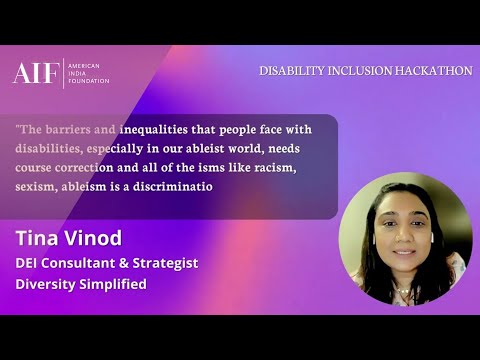
The Hackathon asked companies to turn the mirror inward and map the barriers embedded in their own systems. It also pushed them to design solutions that were practical and scalable. As Navya Verma, HR and D&I Manager at Compass Group India, reflected, “The disability charter of D&I still lacks awareness, the right sensitivity, reasonable accommodations, and accessibility.” Her words echoed a truth that many employers acknowledged during the process, and they became a grounding force in shaping the next set of actions companies were willing to take.
The Search for a Standard – And the Birth of DI-verse
“If you can’t measure it, you can’t fix it,” Peter Drucker
As AIF engaged with hundreds of employers, a recurring question emerged:
How does a company know when it is ‘truly’ inclusive?
Everyone seemed to be working with their own unofficial checklist. One organization invested in ramps. Another focused on hiring. A third ran workshops. But none of these efforts answered a more essential need: a national, credible, measurable standard that defined what ‘good’ looked like.
Without such a standard, progress would always be uneven, subjective, and fragile.
To address this, AIF convened a unique coalition of corporate leaders, accessibility experts, disability rights organisations, HR practitioners, and policymakers, and together they designed a rigorous, practical framework that became DI-verse, India’s first workplace disability inclusion certification, offering a structured, measurable, and results-driven framework that helps organizations embed disability inclusion directly into their culture and operations.
As India’s first corporate certification of its kind, DI-verse provides a definitive roadmap for equitable hiring, accessibility, and inclusive policies. It evaluates and certifies organizations across six essential pillars of inclusion, ranging from Leadership and Policy and Workforce Representation & Talent Development to Accessibility & Workplace Adjustments. Through its three-tiered certification system, DI-verse provides companies with a measurable path to embed disability inclusion into their very organizational DNA.
“With lakhs of PwDs seeking opportunities within India Inc., DI-verse looks very promising. It converges with the government’s economic vision to have more inclusive employment strategies, which can help harness the untapped potential of PwDs to propel India’s growth story forward.” Shri Rajesh Agarwal (IAS), Secretary of the Department of Empowerment of Persons with Disabilities, MSJE

And the impact is clear: dozens of leading national and global corporations, including Infosys, Wipro, Godrej Properties, Zomato, Biocon, and Nestle, have successfully earned the DI-verse Certification across two national cohorts, championed by the Minister of Social Justice and Empowerment.
Cultivating an Inclusive Workplace Culture
Another persistent barrier to disability inclusion is the simple lack of awareness. Employees and managers often hesitate, unsure how to effectively communicate, collaborate, or implement necessary reasonable accommodations for colleagues with disabilities.
ABLE targets this gap directly by conducting essential sensitization workshops that help organizations build informed, respectful, and confident teams. These sessions are designed to demystify disability, directly confronting misconceptions about capability and productivity. Crucially, they guide participants on inclusive communication, workplace etiquette, and legal responsibilities under the Rights of Persons with Disabilities (RPwD) Act. By helping teams understand both the unique needs and the immense strengths of PwDs, these workshops lay the foundational groundwork for welcoming and responsive workplaces.
To further address critical communication barriers, AIF, in partnership with the Indian Sign Language Research and Training Centre (ISLRTC), offers a structured 40-hour Indian Sign Language (ISL) training program, specifically designed for corporate teams, to better support their Deaf employees and colleagues, an intentional move towards engineering a sense of belonging.
The Urgent Need for Inclusive Talent Platforms
The entrenched gap in companies’ access to PwD candidates is a critical bottleneck that undermines otherwise good intentions. While companies increasingly recognize the value of inclusion, the lack of a dedicated, efficient talent pipeline often stalls their hiring efforts.
Hence, the natural next step in the program strategy has been the transition to a job-focused model. Instead of training based on generalized assumptions, AIF designs preparation around real labor-market demands. Candidates learn the precise competencies required for available roles, improving placement outcomes.
Job fairs became a vital piece of this strategy. Together with the Department of Empowerment of Persons with Disabilities, AIF launched India’s largest inclusive job fair campaign during Purple Fest 2024 at Rashtrapati Bhavan. The campaign was designed to host 25 job fairs across major cities. To date, 47 inclusive job fairs have been conducted across 20 states, with 2,022 candidates securing credible job offers.

Such inclusive job fairs are a structured bridge between candidates and employers where the environment is designed for equal participation. Hiring teams arrive prepared, workstations are accessible, sign language interpreters support communication, interviews are adapted to individual needs, screening is transparent, and real jobs are on the table.
Another technological milestone in AIF’s employability efforts was the development of an inclusive job portal designed to address long-standing gaps in accessibility and usability. While job platforms existed nationally, most were not fully accessible to persons with disabilities; interfaces were difficult to navigate with assistive technologies, hiring filters rarely reflected inclusive roles, and employers were not systematically prepared for disability-inclusive recruitment. This left many candidates without a platform they could use independently or trust as a reliable source of inclusive opportunities. AIF’s portal was intentionally built to fill this gap.
Today, the platform hosts over 5,000 candidates and 64 inclusive employers, creating a strategic digital bridge, connecting trained job seekers with committed companies, fundamentally strengthening the recruitment pipeline for PwDs in the formal job market.
Systems That Hold the Change in Place
Enduring inclusion does not happen through isolated efforts. It takes systems that reinforce progress every day, in every state, and across every touchpoint where a person with a disability seeks opportunity. AIF’s partnership with the Department of Empowerment of Persons with Disabilities (DEPwD) and the Ministry of Social Justice and Empowerment (MSJE) marked an important step in that direction. The resulting MoU brought the national PM Daksh skilling platform into direct alignment with AIF’s inclusive job portal, creating a unified digital ecosystem for learning, talent discovery, and employment. This integration allows a person with a disability to move seamlessly from skilling to job search on a single, accessible pathway, something that has been missing in the national landscape.